
Press Releases
Alford, Colleagues Introduce Legislation to Expand Critical Access Hospital Benefits for Rural Facilities
Washington,
February 26, 2026
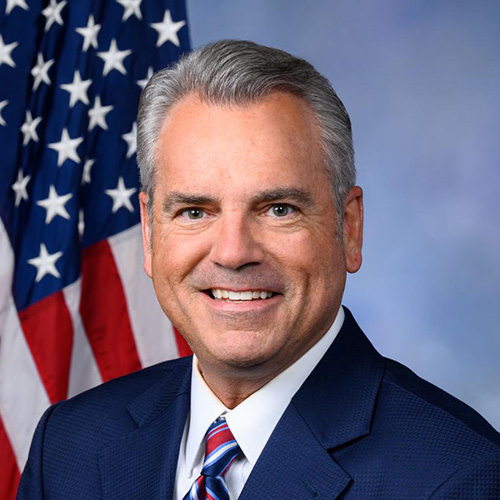
Today, Congressman Mark Alford (MO-04) introduced the Sustaining Rural Healthcare Act. This legislation will expand access to care and provide a financial lifeline for struggling hospitals in rural communities by creating a new “In Character” Critical Access Hospital designation. This comes after the Center for Medicare and Medicaid (CMS) services instituted an updated mapping framework, causing some rural hospitals to lose eligibility for Critical Access Hospital (CAH) designation, despite the physical location of the facility being unchanged. This designation will create parity for the financial benefits between typical Critical Access Hospitals and those under the newly created In Character Critical Access Hospital designation. Read the text of the legislation here. “We aren’t just talking about supporting Missouri’s rural hospitals, we’re taking action,” said Congressman Alford. “This vital legislation will sustain our rural hospitals like Bates County Memorial, preventing closures and ensuring continued access to emergency care for communities like those in the Fourth District. After visiting almost every rural hospital in the Fourth District, I’ve seen first-hand how these facilities are often the only places families can turn to when they need care. We’re proud to introduce the Sustaining Rural Healthcare Act and double down on our efforts to support rural health care providers.” For example, Bates County Memorial Hospital would gain eligibility to become an In Character Critical Access Hospital and receive the corresponding financial benefits. While CMS maintains it is less than 35 miles from the next nearest hospital, which would block its eligibility under the current CAH framework, the mileage is not indicative of travel time for many Bates County residents due to the lack of infrastructure and isolation of some areas. “Bates County Memorial Hospital is not designated as a Critical Access Hospital, yet we serve a largely rural population with Medicare and Medicaid as our primary payers. Unlike nearby Critical Access Hospitals, which receive cost-based reimbursement and access to the 340B program, we are paid under a system that does not reflect the true cost of providing 24/7 emergency and essential services in a low-volume rural setting. Those hospitals can better absorb inflation and rising labor costs — protections we do not have — even as we compete with them for limited clinical staff,” said Bates County Memorial Hospital CEO Greg Weaver M.A., MHA, EMT-P. “To sustain services, we have relied on reserves to cover operational losses. While this has protected access in the short term, it reduces our days' cash on hand and is not sustainable. Without change, we risk becoming another rural Missouri hospital closure. Seeking Critical Access Hospital designation is not about growth — it is about financial stability, equitable reimbursement, and proactively protecting healthcare access for our community.” The Sustaining Rural Healthcare Act is co-led by Reps. Henry Cuellar (TX-28), Glenn “GT” Thompson (PA-15), and Jill Tokuda (HI-02). “Border communities like ours in South Texas rely on rural hospitals to deliver care close to home,” said Rep. Cuellar. “In many of these areas, the nearest alternative may be miles away, and when a hospital is forced to scale back services or risks closure, families feel the impact immediately. Our bill provides rural hospitals with the stability they need to keep essential health care services accessible for our communities. It also strengthens technical assistance efforts to help these facilities improve operations and long‑term financial stability. I’m proud to co‑lead this bipartisan effort to support the providers who keep rural Texas strong, healthy, and cared for.” “Rural America continues to face challenges when it comes to delivering health care services,” Rep. Thompson said. “By expanding and providing increased flexibility for at-risk rural hospitals, we can help ensure our communities continue to have robust access to world-class care.” “For Hawaiʻi’s neighbor islands, rural hospitals are lifelines, but outdated federal rules are keeping critical resources and designations out of reach,” said Rep. Tokuda. “Current Critical Access Hospital criteria disqualify facilities serving some of our most isolated and high-need populations. This bill stabilizes rural hospitals so they can keep their doors open and continue delivering critical access care to the communities that depend on them. We’re ensuring rural hospitals have the support and flexibility to provide high-quality care close to home, where patients belong.” Background: CAH Designation:
The Sustaining Rural Healthcare Act: This bill intends to provide financial relief to our rural hospitals and increase access to health care for patients in rural communities by:
### |